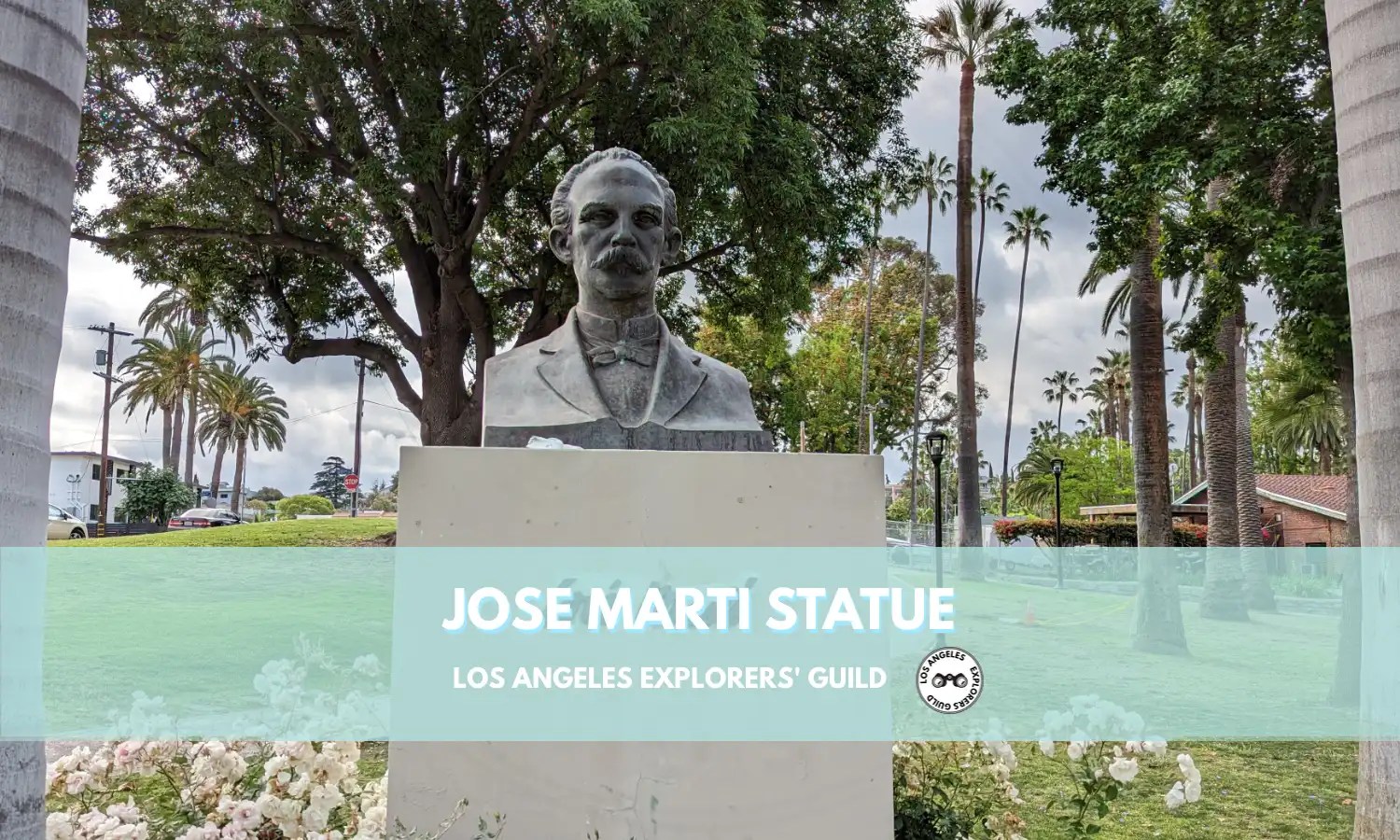
In Echo Park, right across the street from the Angelus Temple, you’ll find a statue honoring the man known as the liberator of Cuba.
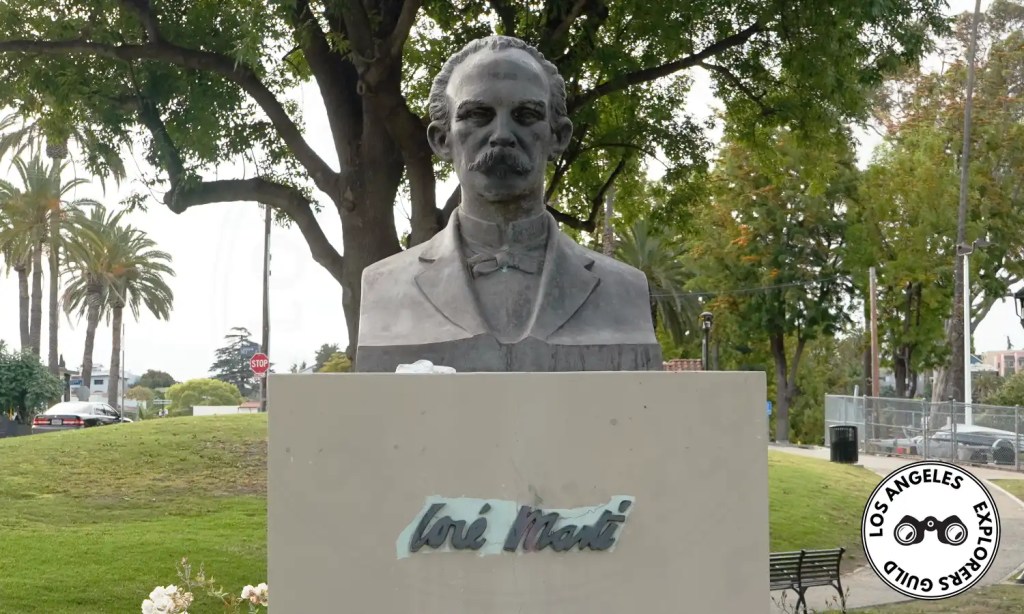
The Los Angeles Legacy of José Martí
The first Cuban refugees (fleeing Fidel Castro’s rise to power) who arrived in Los Angeles in 1962 were welcomed with open arms by Echo Park’s network of churches.
Because of this generosity, the neighborhood has held great significance for Cuban Angelenos in the years that have passed since these first Cuban arrivals.
So it’s no surprise that Echo Park’s namesake park is home to a statue honoring poet-philosopher-revolutionary José Martí, one of the country’s great historical leaders and the man credited with liberating Cuba from Spanish rule in 1902.
The José Martí Statue Story
The statue, which was sculpted by the Havana-born Sergio Lopez-Mesa in 1975 and dedicated In Echo Park on January 28, 1975, was a gift to Los Angeles from Patronato Jose Marti, Inc. a Cuban-American arts non-profit (it has since ceased operating).
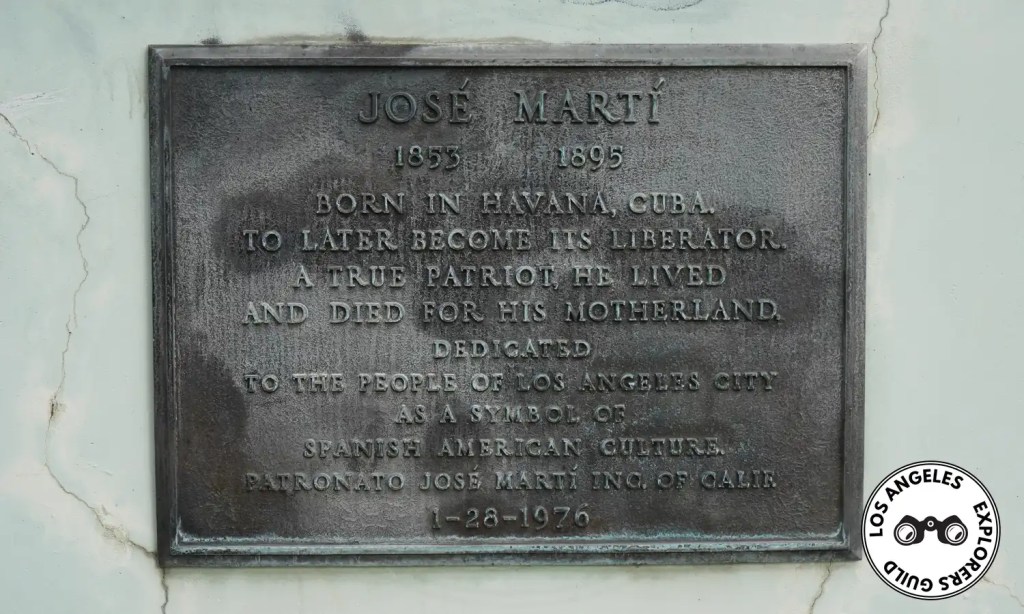
The statue features a few plaques bearing the usual inscriptions. A plaque mounted on the right side of the statue’s base summarizes the life of Señor Marti, sculptor Lopez-Mesa, and the importance of Echo Park to Angelenos of Cuban descent.
The plaque on the back side of the monument offers accolades to Señor Martí and his importance as a symbol for Spanish American Culture.
Lastly, the left of the statue’s concrete base has been inscribed with two famous quotes attributed to Martí:
El que tenga patria que la honore el que no, que la conquiste
and
Con todos y para el bien todos
The first translates roughly to “He who has a country, let him honor it; he who doesn’t, let him conquer it” and the second means “With everyone and for the good of everyone.”

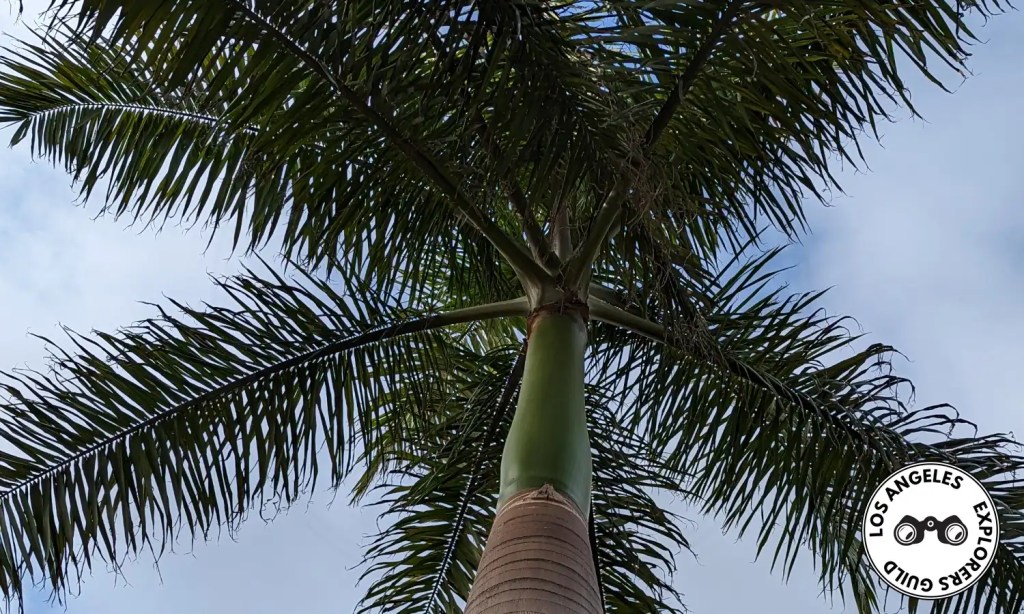
Also notable, the statue is flanked by a pair of Cuban Royal Palms, one of the few (if not the only) place in a city filled with palm trees one can see this particular species.
This particular spot in Echo Park was so important to the Los Angeles Cuban community that the corner of Bellevue and Glendale was dedicated as Plaza José Martí in 1997.
The intersection here still carries that distinction, as evidenced by a weather-worn and easily overlooked sign sitting high atop the traffic light at the corner at Park Avenue.
The Latest Exploration …
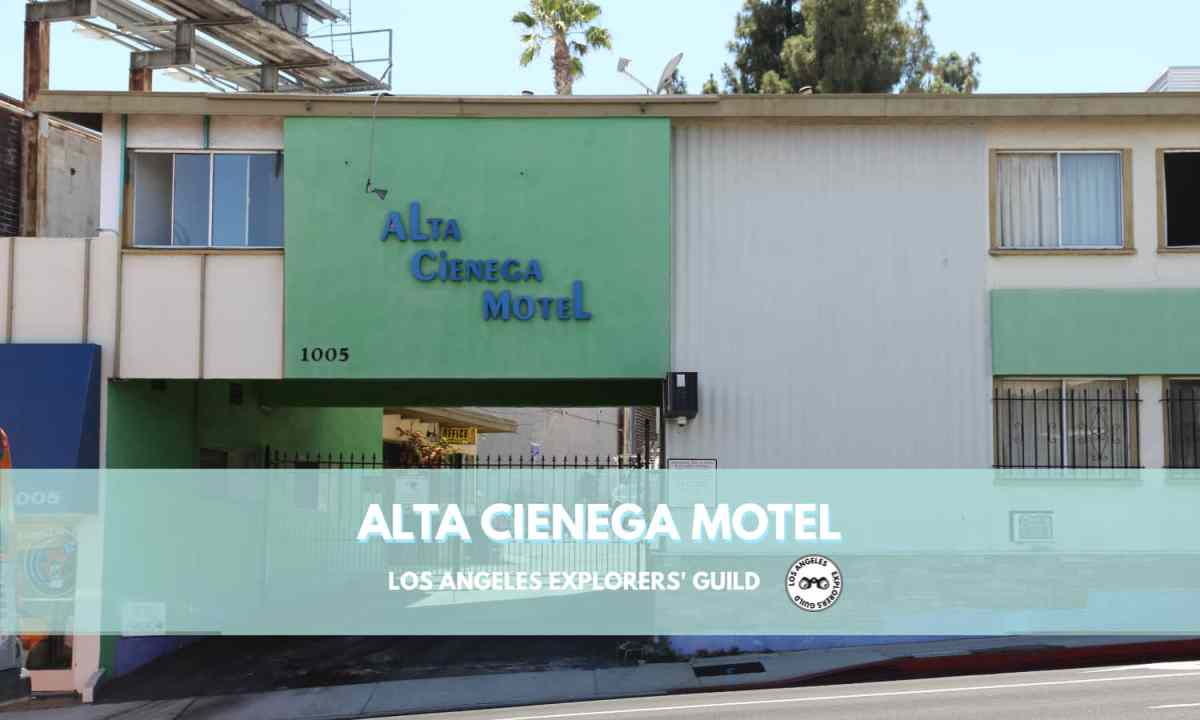
Alta Cienega Motel: The Other Morrison Hotel
It’s been called the most disgusting hotel in Los Angeles. It’s also been called a must-see destination for any serious fan of The Doors. No, it’s not Morrison Hotel. It’s Jim Morrison’s final home in West Hollywood.
Keep readingLoss of a Festival, Neglect of a Monument
One reason this particular corner was held in such high regard by the Cuban-Americans of Los Angeles is because for more than twenty years, the statue of Martí was the centerpiece of the Presencia Cubana Festival.
This celebration of Cuban culture and music, held annually in May (but sometimes in early June), also served to celebrate Cuba’s independence from Spain on May 20, 1902.
But in 2015, much to the outrage of the community, the popular festival didn’t happen. The organizers were surprised when they were denied a permit for a dance floor in front of the stage. Blame was placed on the shoulders of former Councilperson Mitch O’Farrell who allegedly didn’t want Echo Park’s newly planted grass to be disturbed by dancing.
In subsequent years the Festival (now known as the Cuban Music Festival) has been held (albeit sporadically) at La Plaza de Cultura y Artes in Downtown Los Angeles, just across the street from the El Pueblo de Los Angeles Historical Monument, home of the monument honoring Los Pobladores. and right next door to La Placita.
The loss of the annual festival was the latest sign that the Cuban-American presence in Echo Park was waning. And as the community’s influence lessened in Echo Park, the statue of José Martí fell into disrepair.
And although it underwent a restoration in 2002 (after a failed bid to convince the city to expand the monument with a 12-foot tall wall and 2,800 square foot paved plaza), the statue of the Cuban leader has since been largely overlooked.
In fact, for two years the statue of José Marti sat inaccessible behind the temporary chain link fencing erected following the forced clearing of the Echo Park homeless encampments in early 2021. But that fencing finally came down in early 2023, and you can, once again, pay homage to the liberator of Cuba.
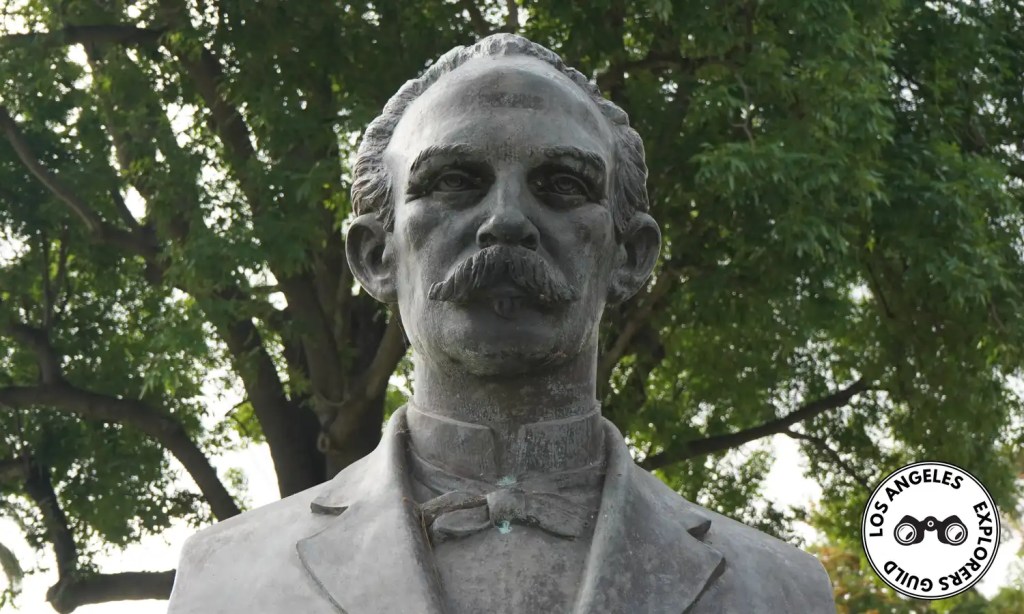
José Martí Statue
- 1082 Glendale Blvd, Los Angeles
- GPS Coordinates: 34.075851, -118.261355 [ Google Maps ]
- what3words: ///treat.socket.relate
Thank you for visiting the Los Angeles Explorers Guild. If you’re enjoying our explorations of Los Angeles, please consider supporting us on Patreon or making a one-time donation via PayPal. We appreciate your support.
 Los Angeles Explorers Guild